β οΈ Warning for private equity, angel investors, and tech founders operating in California
Case study Β· Music industry Β· California
How Buckcherry frontman Josh Todd Sued His Own Venture To Escape His Signed Word.
Josh Todd and Todd Meagher created Todd Entertainment LLC, and for years the Buckcherry frontman behaved like a fully compliant partner. He signed the operating agreement, cashed a guaranteed $4,000 monthly living stipend out of the LLC that financed his comeback, and let his partner investor Todd Meagher carry every dollar of downside. Rather than honor his agreement with Todd Meagher that resurrected his brand, he weaponized California's Talent Agencies Act β to have the entire company declared void from inception, wiping out his obligations to the partnership and any chance for Meagher to recoup his investment. In practice, he sued his own company to escape debt, wipe out Meagher's investment, and free himself to individually enjoy the benefit of that investment.
The Unwinding: Catching the Cartel
The loophole worked for a moment. The courts worked for thirteen years.
Josh Todd used a state-level loophole to temporarily run away from his word, but he could not run from the broader legal system. Todd Meagher launched a multi-court, multi-million dollar counter-offensive that lasted 13 years. In the end, Meagher didn't pay out a single cent to anyone. Instead, every single corporate player that weaponized the split and built fortunes off the Buckcherry comeback was cornered and forced to wire direct financial settlement payments to Meagher. Furthermore, Meagher stripped the artist of his own work, securing 100% exclusive commercial ownership of the master recordings.
Initial Cash Capital Injected
$218,000+
Sole-source funding for recording, production, and brand revival.
Total Cash & Artist Payments
$800K+
All capital deployed and payments to the artist, excluding Meagher's sweat equity.
Artist Lifestyle Stipend Paid
$4,000 / mo
Guaranteed living draw paid out of the LLC to the frontman.
Duration of Resulting Litigation
13 Years
State labor proceedings, appeals, and federal bankruptcy work.
Section 01
The De-Risked Setup
In 2003, Buckcherry was a dead brand. The band had dissolved, the major label relationship was gone, radio had moved on, and there was no touring income, no catalog leverage, and no institutional interest in financing a relaunch. Josh Todd had zero leverage β no bankable advance, no operating capital, and no vehicle capable of paying for a record.
What he did have was access to entrepreneur Todd Meagher, who agreed to assume 100% of the commercial financial risk. Meagher funded the venture through an LLC: studio time, production, mastering, marketing, business overhead, and a guaranteed monthly stipend that covered the artist's personal living expenses while he wrote and recorded.
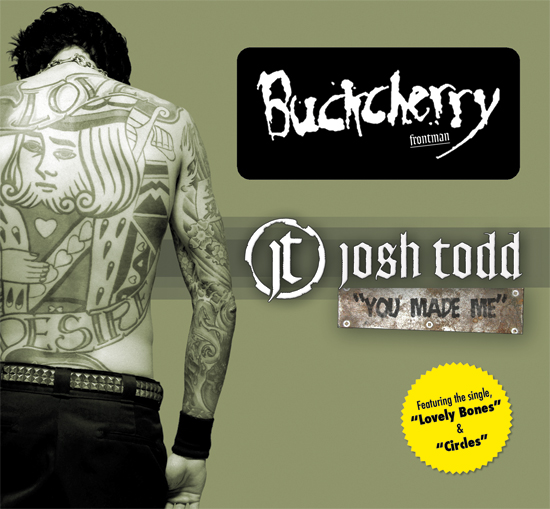
That capital produced the album βYou Made Meβ and the 22 master recordings that reactivated the Buckcherry name. The artist contributed performance. The investor contributed cash, structure, and exposure to total loss.
This is the asymmetry every investor should recognize: the artist risked time, the investor risked money β and California law only protects one of those two positions.
Section 02
The Ultimate Subsidy: Who Actually Paid?
The operating agreement looked like a partnership on paper. In practice, the economic burden was loaded entirely onto one side β while the artist collected a risk-free income stream and later walked away from the obligation.
01
The Sweat Equity
Todd Meagher served as the Managing Member yet worked completely for free. He drew zero salary and charged zero corporate management fees while building the company from nothing. Meanwhile, Josh Todd pocketed a guaranteed $4,000 monthly living check regardless of whether the venture generated a single dollar of revenue.
02
Full Campaign Funding
Meagher funded 100% of the operational assets out-of-pocket: all studio recording time, mixing and mastering engineers, session musicians, merchandise design and manufacturing, tour transport and crew logistics, and global radio marketing. The artist contributed vocals and image; the investor contributed every hard dollar required to turn those into a commercial comeback.
03
The Extraction Hook
The ethical warning is stark: the artist let the founder labor without pay, build his physical brand infrastructure, and absorb every downside β then deployed a legal loophole to seize the momentum and walk away from the debt. The investor supplied the runway, the product, and the risk capital; the artist supplied the voice, then supplied the lawsuit.
This is the subsidy model every investor must interrogate: when one party bears 100% of the cash risk and the other party controls the relationship brand, the contract is the only thing standing between capital and confiscation.
Section 03
The Japan Set-Up
The Udo Artists festival contract
The licensed booking agent, Andrew Goodfriend, explicitly asked Todd Meagher to step in and contact the Japanese promoter directly. Meagher possessed deep personal industry relationships in Japan; Goodfriend did not. At the agent's own request, Meagher made the call, salvaged the tour, and secured an extra $20,000 contract upcharge for the LLC.
Goodfriend did not correct Meagher. He did not insist the promoter go through him. He let Meagher take the risk, accept the gratitude, and produce the result. Then he used that exact phone call as the centerpiece of the state complaint β claiming Meagher had acted as an unlicensed talent agent.
The irony is absolute: a favor performed at the licensed agent's request, for the LLC's benefit, became the weapon used to blow up the LLC. The investor's own relationships were weaponized against him β and the agent who asked for the help walked away with the client.
Section 04
Behind the Smokescreen: Active Sabotage
While Todd publicly played the compliant frontman, Meagher's civil countersuits allege a parallel campaign of hidden damage β actions that undermined the company from the inside while the investor was still paying the bills.
01
Credit Card Abuse
Josh Todd allegedly made unauthorized personal purchases on Todd Meagher's personal credit cards β while simultaneously collecting his guaranteed $4,000 monthly corporate stipend. The investor was funding the artist's lifestyle twice over: once through the LLC and again through direct personal charges.
02
Torpedoing the JVC Deal
Todd allegedly disparaged his own company to executives at JVC / Victor Entertainment, deliberately destroying lucrative international record distribution deals. Rather than building the venture he had contracted into, he reportedly sabotaged the very revenue streams that would have repaid the investor.
03
The 5-Year Premeditated Delay
Todd abandoned the company in 2004, yet he waited until May 2009 β nearly five years later β to file the "phony" Talent Agencies Act complaint. By then Buckcherry was making millions again, and the TAA claim became a retroactive escape hatch to dodge breach of contract lawsuits.
The pattern is not passive disagreement. It is alleged active sabotage: personal enrichment, deal destruction, and a statute weaponized years after the fact to erase a signed obligation.
Section 05
The Judgment Net: Who Wired the Funds?
While individual dollar amounts are strictly confidential, Todd Meagher did not pay out a single cent to anyone. Instead, every single one of the following defendants was forced to make financial settlement payments directly to Meagher.
01
7-11 Recordings, LLC & Eleven Seven Music
The downstream record labels that distributed the multi-platinum album β15β and capitalized on the singer's post-split recording assets.
02
Warner Chappell Music
The global music publishing powerhouse administering the back-end songwriting royalties and lucrative mechanical licenses for the catalog.
03
The Booking Agencies (The Agency Group & TKO Booking Agency / Andrew Goodfriend)
Sued for fraud, breach of fiduciary duty, double-charging commissions, and initiating the TAA trap.
04
Buckcherry Worldwide, LLC
The band's main corporate entity that actively exploited Josh's exclusive services in violation of his 3-year signed partnership.
05
10th Street Entertainment (Allen Kovac)
The powerhouse management team that orchestrated the comeback and attempted to bypass Meagher's original contract structure.
One-way capital flow
The checks were not written by Meagher. They were written to Meagher β by the labels, publishers, agencies, band entity, and management company that had tried to write him out of the comeback.
Section 06
The Booking Agent Double-Cross
Structural alert
The venture did exactly what a compliant investor is supposed to do: it hired a licensed professional. Licensed booking agent Andrew Goodfriend was retained to handle live engagements. The problem was not that the LLC avoided a licensed agent β it is that the licensed agent pushed his own statutory work back onto the LLC's people, invoiced for it, and then used that same arrangement as the weapon.
βEssentially, Andrew Goodfriend lured my clients into doing his work for him, charged my clients for the services as if he had performed them, and then turned my clients in to the California Labor Commission for performing unlicensed talent agent's services.β
The moment the LLC was crushed and its operating agreement declared void, the client relationship did not disappear β it simply changed hands. The same agent kept the artist, kept the relationships the investor's capital had built, and moved directly into the comeback tour cycle.
That cycle generated millions in commissionable touring revenue. None of it flowed back to the entity that funded the record, paid the stipend, and absorbed the risk of failure. The investor financed the runway; other people boarded the plane.
Section 07
The Cartel: Who Else Fabricated the Split?
Meagher's civil countersuits did not stop at the frontman. They named the full corporate circle that allegedly helped engineer the break, profit from the comeback, and leave the investor holding the empty shell of the original LLC.
01
Buckcherry Worldwide, LLC
The band's corporate entity allegedly exploited Josh Todd's services in direct violation of his 3-year signed exclusivity agreement with Meagher's LLC β booking shows, releasing product, and capturing revenue that the original venture had financed and contracted for.
02
10th Street Entertainment
Allen Kovac's new powerhouse management team allegedly conspired behind the scenes to squeeze Meagher out, hide the artist's new earnings, and redirect the comeback's upside into a structure that excluded the original investor.
03
Universal Music Group & Atlantic Records
The global labels bankrolled and distributed the multi-platinum album β15β, willfully profiting from an artist who had legally walked away from his original corporate debts and contractual obligations.
Settlement reality
They all stood to make millions from Buckcherry's comeback, and they all had to pay to make Meagher's 13-year legal nightmare go away in the 2017 global settlement.
Section 08
The Global Resolution: What Actually Ended in 2017
The 2017 global settlement is frequently mischaracterized. The precise financial figures remain strictly confidential, but the directional outcome is not in dispute: Todd Meagher walked away with a total legal and financial victory.
01
No Outbound Payments
Todd Meagher did not pay a single cent to Josh Todd, Buckcherry Worldwide, or any booking agency, manager, or record label. The capital flow ran one way: toward the investor who had been stripped of his company.
02
The Payee Reality
Every named defendant β major booking agencies, Buckcherry's corporate entities, management, and the record labels β was forced to make financial payments directly to Meagher to resolve his massive multi-million dollar claims.
03
Total Asset Retention
In addition to receiving payments from all opposing parties, Meagher secured 100% exclusive commercial ownership of the master recordings catalog β the only physical property that survived the state court's nuclear remedy.
Bottom line
The LLC may have been declared void, but the investor won the war. Meagher exited the 13-year fight with his masters, his money, and the record corrected.